



5 Common Seal Failures and How to Prevent Them
Seals are mission-critical across industries such as automotive, aerospace, food processing and medical to name a few. When they fail, repairs, downtime, or worse can hit hard. Most seal issues trace back to just a handful of causes. Spot them and fix them to save your process and your budget.
1. Chemical Attack

What happens: Incompatible chemicals make seals swell, soften, or crack.
Typical error: Nitrile (NBR) O-rings used with aggressive solvents or fuels.
How to prevent:
- Pick materials built for the media like Viton or FFKM.
- Work with ISO 9001:2015-certified suppliers who guide chemical compatibility.
- Reference a trusted chemical compatibility chart (Rubber Chemical Resistance Chart)
2. Compression Set
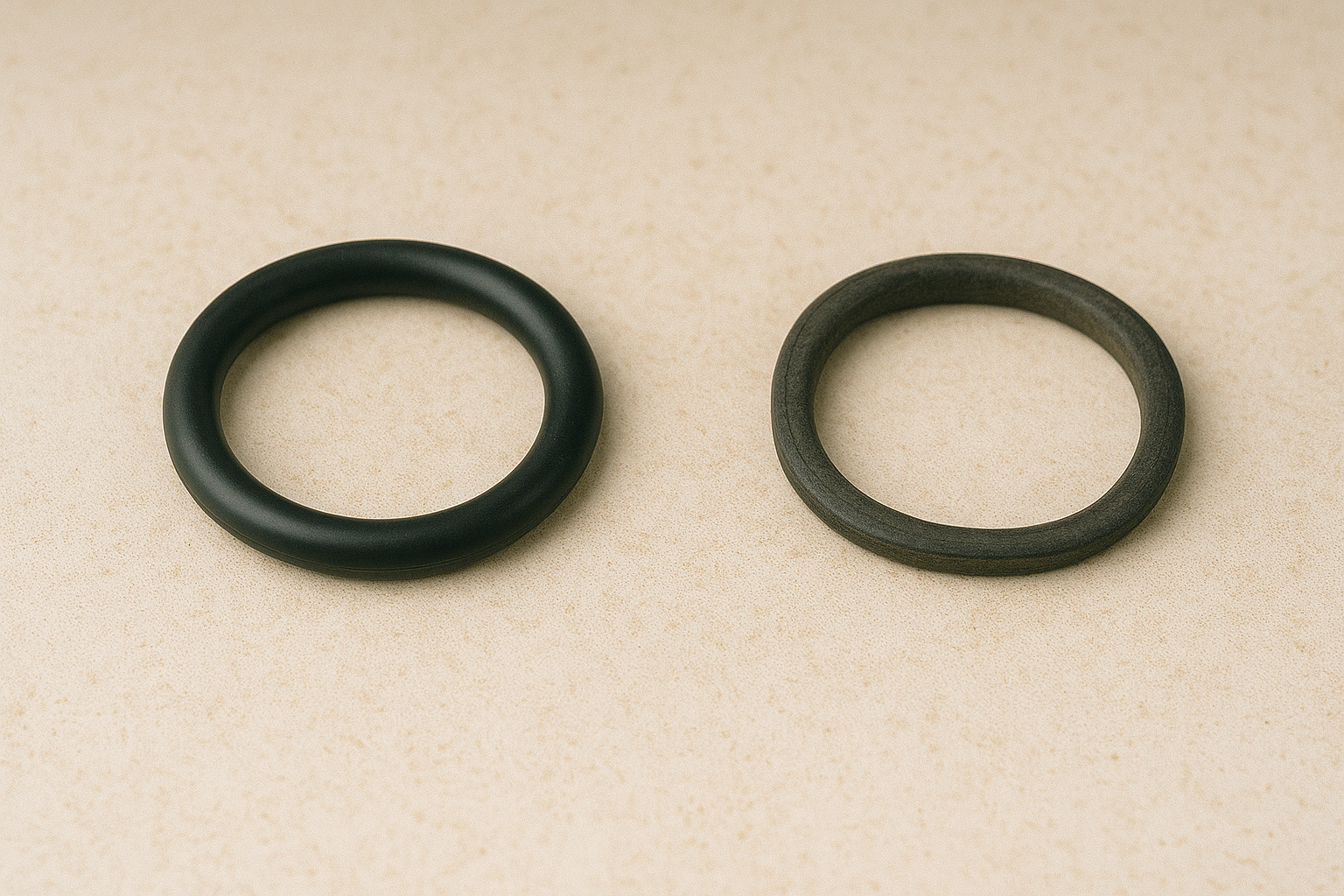
What happens: Seal loses elasticity—won’t spring back so leaks form.
Typical error: O-rings flatten over time in hot environments.
How to prevent:
- Use materials with low compression set such as silicone, EPDM, or FKM.
- Stay within the material’s heat rating over time.
3. Extrusion and Nibbling

What happens: High pressure pushes seals into gaps, chipping them.
Typical error: Hydraulic seals shredded by pump pressure.
How to prevent:
- Use backup rings for support.
- Shrink clearance gaps—tighten tolerances.
- Switch to stiffer durometer materials.
4. Thermal Degradation

What happens: Heat causes hardening, cracks, or brittleness.
Typical error: Not choosing the right material for the temperature range of the environment.
How to prevent:
- Choose high temperature elastomers like Viton, AFLAS, or perfluoroelastomers.
- Test and confirm actual operating temperatures.
5. Improper Installation
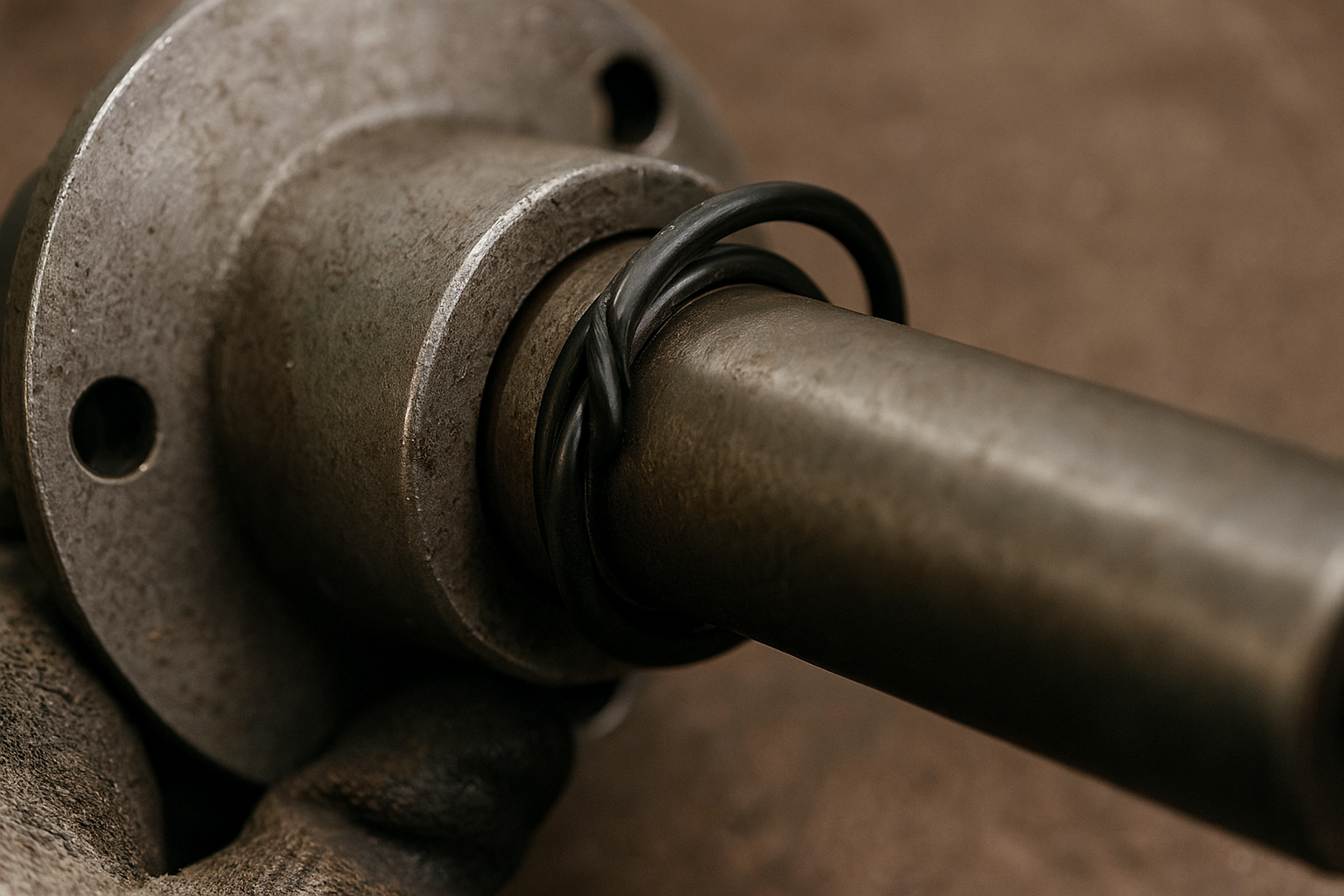
What happens: Twists, cuts, overstretching during assembly can prematurely fail o-rings.
Typical error: Not considering the impact of proper installation procedures.
How to prevent:
- Use proper tools, lube, and process.
- Train assembly teams.
- Consider pre-lubricated or custom-sized seals for easier install.
Final Thoughts
Most seal failures are avoidable with smart material choices, solid design, and careful fitment. Mykin Inc. delivers custom rubber parts and sealing solutions with ISO 9001:2015 quality, backed by PPAP as needed. From FDA-grade silicone to Viton O-rings to custom-molded gaskets—we help you pick the correct parts right now!
Contact us here to talk about your seal needs. Let's keep things leak-free.
Related Posts

Silicone and Fluorosilicone, which is best for your application?
Comparing and Contrasting Viton vs. Kalrez

The Biggest Misconception About O-Rings and Why It Matters

How Material Hardness Changes Real-World Performance in Rubber Parts
ASTM D2000 Material Spec




Comments