



The Biggest Misconception About O-Rings and Why It Matters

When it comes to rubber components in sealing applications, the O-ring is probably the most recognized shape. But despite their simplicity, O-rings are often misunderstood—even by experienced engineers and buyers. One of the most common misconceptions? That rubber O-rings com
press like a sponge, shrinking in volume to form a seal.
That’s not how it works.
Rubber Isn’t Compressible, It Moves
Let’s clear this up: rubber, like water, is incompressible. That means when pressure is applied, the rubber doesn’t disappear or shrink, it just moves. So when you install an O-ring into a groove and tighten a mating surface against it, the rubber flows and fills the gaps, creating a tight seal.
This is a key principle in rubber engineering. Understanding this concept helps prevent installation errors, premature failures, and the selection of the wrong durometer or groove dimensions.
Where the Sponge Misconception Comes From
It’s easy to see why the sponge idea sticks. Visually, a compressed O-ring looks flatter, and if the material is soft enough, it might even feel like it’s being squished. But what’s actually happening is displacement, not compression.
This distinction is important when designing hardware for O-rings. For example, if you don’t provide the right groove di
mensions, the rubber can’t properly flow—and that could result in:
- Seal failure
- O-ring extrusion
- Permanent deformation
- Increased wear and tear
Why It Matters for Custom Molded Rubber Applications
For custom molded rubber parts, precision is everything. Misunderstanding how rubber behaves can lead to poorly fitting seals, wasted material, and expensive redesigns. Whether you’re working with O-rings, mechanical seals, or any other rubber components, the principle of incompressibility needs to be at the core of your design.
At Mykin, we often guide clients through these details during the custom rubber molding process. It’s not just about shape, it’s about functionality, material selection, and understanding how rubber behaves under pressure.
What to Consider When Designing for O-Rings
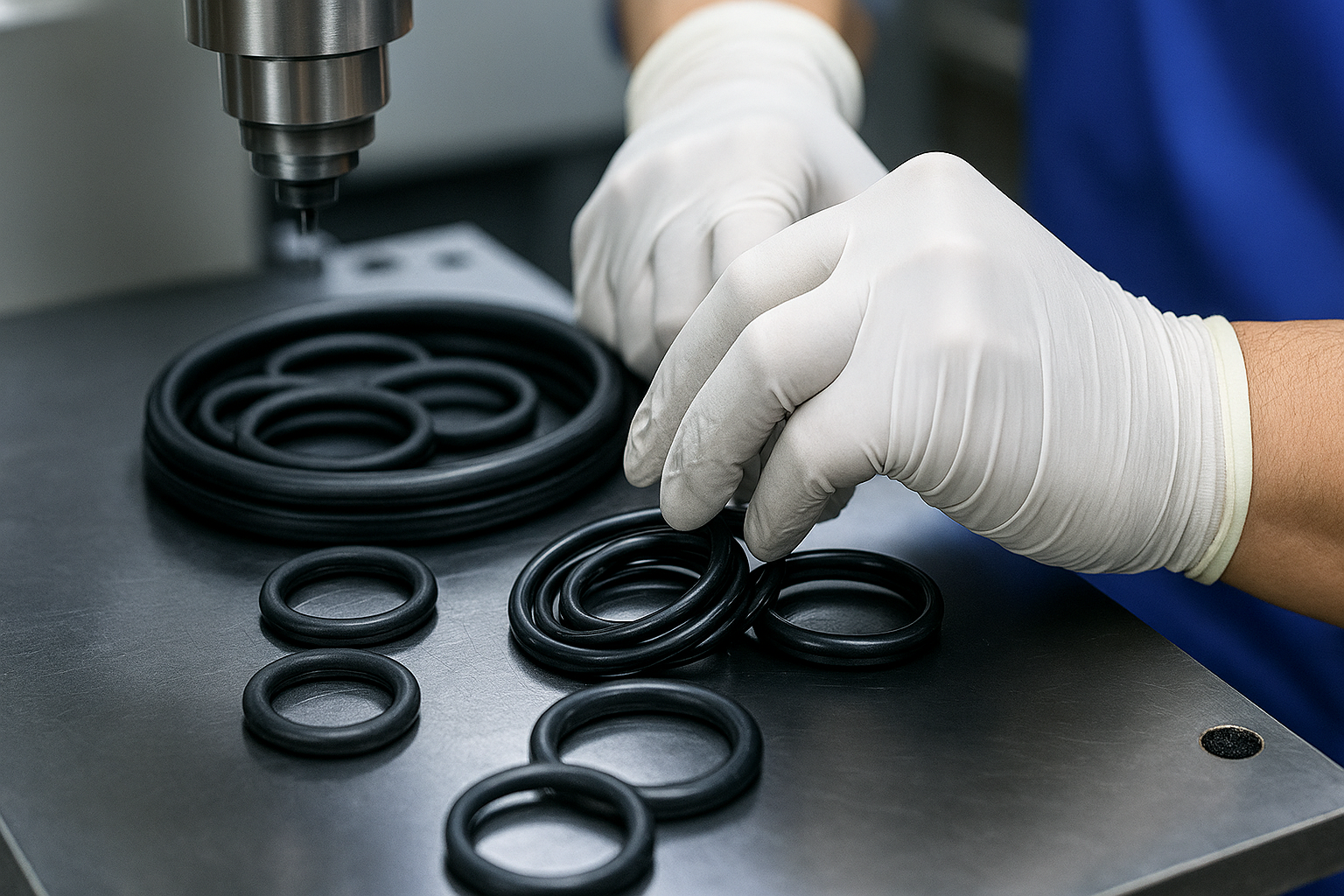
Here are a few best practices:
- Correct groove size: Make sure the groove allows for the rubber to displace into the right space.
- Right durometer: Too hard, and the rubber won’t flex enough to seal. Too soft, and it might extrude under pressure.
- Material compatibility: Not all rubber is created equal. Choose based on temperature, chemical exposure, and mechanical needs.
Real-World Impact
Let’s say you’re designing a mechanical assembly where the O-ring has to seal under 1000 psi. If you treat it like it compresses to half its size, you’ll likely under-design the groove space. The result? The O-ring could blow out under pressure, or worse—cause a leak that damages the entire system.
Now scale that error across hundreds or thousands of parts. It’s easy to see how a simple misconception can lead to big costs.
Learn More About Rubber Sealing
Understanding rubber behavior is key to designing better products. For a deeper dive into how material properties affect sealing performance, check out this article from Parker Hannifin on O-ring basics.
And if you’re ready to explore options for custom molded rubber parts or need help specifying O-rings and mechanical seals, visit our Custom Rubber Molding Services page.
Final Thought
O-rings aren’t complicated, but misunderstanding how they work leads to real problems. Rubber doesn’t compress like a sponge. It flows. Design with that in mind, and your sealing applications will perform better, last longer, and save you money in the long run.
Related Posts

Silicone and Fluorosilicone, which is best for your application?
Comparing and Contrasting Viton vs. Kalrez

5 Common Seal Failures and How to Prevent Them

How Material Hardness Changes Real-World Performance in Rubber Parts
ASTM D2000 Material Spec




Comments