



Material Color in Rubber Parts: What Color Means and When It Affects Performance
When choosing or designing rubber parts, color might seem like just a cosmetic detail. But sometimes, color can hint at what’s inside the compound—or even influence how well it performs. This article explains how rubber color affects strength, stability, and identification so you can make better material choices for your next project.
Why Most Rubber Is Black

Black rubber dominates the industry because of one key ingredient: carbon black. It’s more than just a pigment—it reinforces the rubber’s structure and boosts its resistance to abrasion, tearing, and UV light.
Without carbon black, rubber compounds are softer and less durable.That’s why, unless a color is specified, black rubber is the standard across industrial seals, O-rings, and gaskets.
For more on how carbon black improves rubber properties, visit Rubber & Seal’s guide on carbon black.
When Rubber Parts Come in Other Colors

Colored rubber isn’t just for aesthetics—it’s used for identification, branding, or visual inspection in specific industries.
- Blue – Common in food and pharmaceutical applications for easy detection.
- Red or brown – Often high-temperature compounds like silicone or Viton.
- White or clear – Typically medical-grade or high-purity materials.
- Green or yellow – Used for coding and quick identification between compounds.
Pigments can be organic (vibrant but fade faster) or inorganic (durable but less bright). Each choice slightly changes how the rubber handles heat, UV, and wear.
When Color Impacts Performance
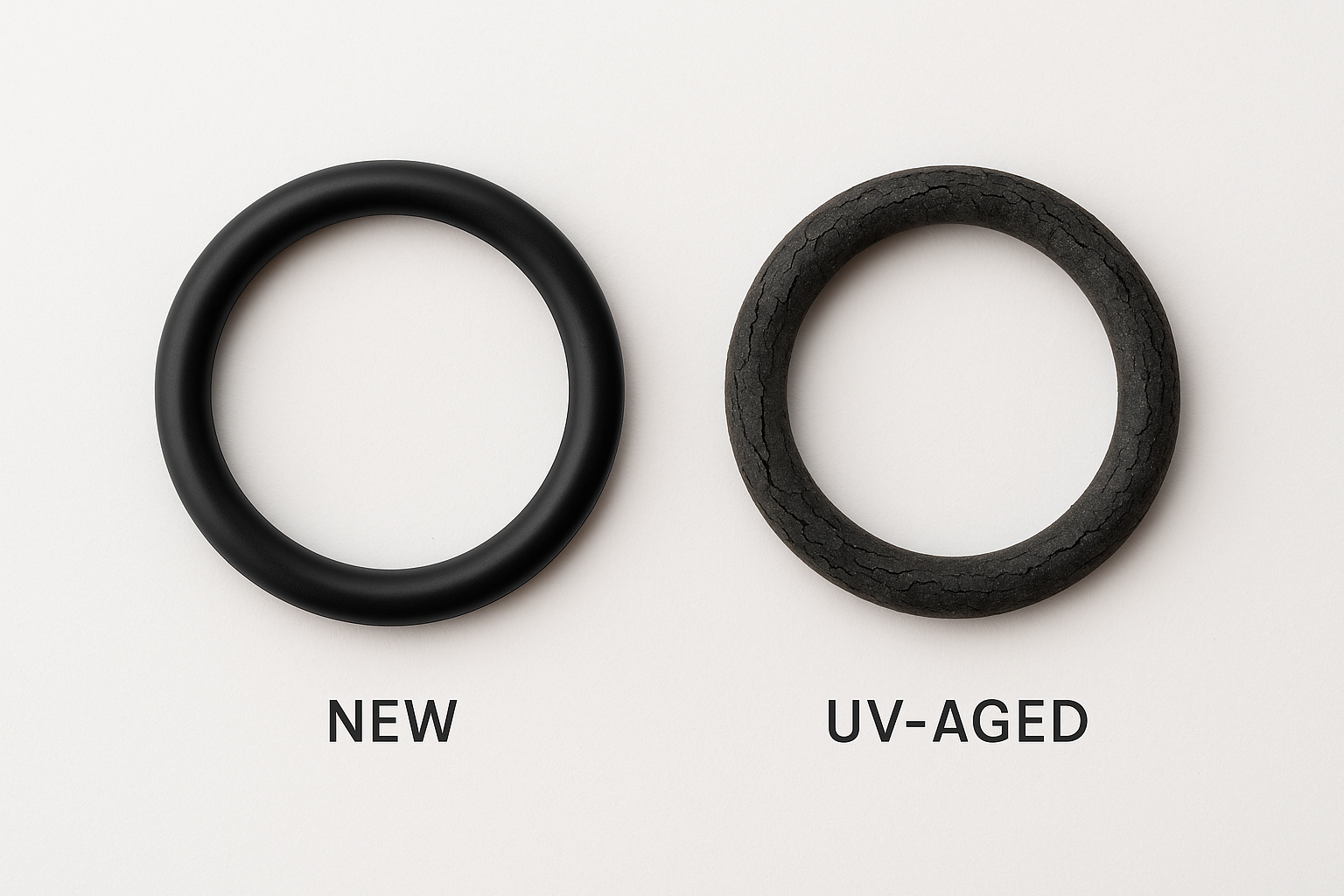
Color additives can influence the physical behavior of rubber parts.
1. Mechanical Strength
Colored pigments can dilute reinforcement from carbon black, reducing tensile strength and wear resistance. For non-critical applications, this difference may not matter—but for seals under pressure, it does.
2. Thermal Stability
Some pigments can degrade under heat or curing conditions, causing discoloration or uneven curing. High-temperature elastomers (like silicone or FKM) need stable pigments to avoid these issues.
3. UV and Ozone Resistance
Dark compounds, especially black, naturally resist UV damage. Light colors need added stabilizers to prevent fading or cracking under sunlight.
Best Practices When Specifying Color
- Always start with material performance requirements—color comes second.
- If visual identification is needed, request test data for colored versions.
- For outdoor or high-heat uses, ask for UV and heat-stable pigments.
- Note that colored rubbers may show slight performance trade-offs versus black compounds.
- When unsure, consult a manufacturer like Mykin Inc. for guidance on compound selection.
Looking for colored seals or custom molded rubber parts? Request a quote from Mykin Inc. to explore your options.
Conclusion
Rubber color does more than just look good—it can reveal what’s inside and how the part will perform. Black remains the benchmark for durability, but colored rubbers play an important role in identification and safety. The key is understanding when color affects performance—and working with a trusted supplier to choose the right material for the job.




Comments