




Silicone and Fluorosilicone, which is best for your application?
Here are some key properties and limitations of silicone and fluorosilicone materials for your reference.
Silicone:
- Excellent resistance to extreme temperatures, ranging from -100°C to 250°C.
- Outstanding flexibility and durability, making it ideal for sealing and insulating applications.
- Good resistance to ozone, sunlight, and aging.
- Not suitable for use with strong acids or solvents as it can degrade over time.
- Limited adhesion to certain substrates without proper surface preparation.
Fluorosilicone:
- Similar properties to silicone but with enhanced resistance to fuels, oils, and solvents.
- Maintains flexibility and sealing capabilities across a wide temperature range.
- Excellent resistance to harsh chemicals, making it suitable for aerospace and automotive applications.
- Higher cost compared to standard silicone due to specialized formulations.
- May have limited availability compared to silicone in some markets.
Both silicone and fluorosilicone offer unique advantages depending on the specific requirements of your project. If you need further information or assistance in selecting the right material, please feel free to reach out.
Related Posts
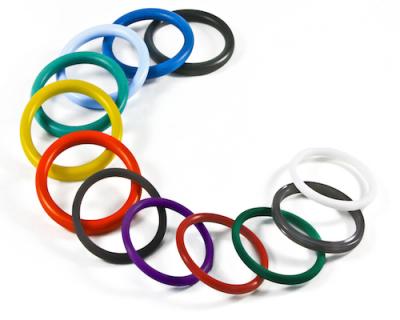
Comparing and Contrasting Viton vs. Kalrez
Posted on May 8, 2024| Posted in Blog Series

The Biggest Misconception About O-Rings and Why It Matters
Posted on August 1, 2025| Posted in News, Blog Series

5 Common Seal Failures and How to Prevent Them
Posted on September 4, 2025| Posted in Blog Series

How Material Hardness Changes Real-World Performance in Rubber Parts
Posted on November 13, 2025| Posted in Blog Series
ASTM D2000 Material Spec
Posted on March 2, 2026| Posted in Material Properties

How to pick and size a Rubber Grommet
January 6, 2014

Comparing and Contrasting Viton vs. Kalrez
May 8, 2024

Which Rubber Material is Right for You?
October 30, 2013
Q4 2008
January 27, 2013

5 Common Seal Failures and How to Prevent Them
September 4, 2025

SAE J200 Material Spec
April 23, 2026

ASTM D2000 Material Spec
March 2, 2026

Everything You Need in a Rubber Properties
January 29, 2026

How Material Hardness Changes Real-World Performance in Rubber Parts
November 13, 2025

Comments